About the Diocese
A young local Church in the Southwest Region of Cameroon, gathered around the Heart of Christ and sent to serve.
Who we are
A Church of the Sacred Heart in Cameroon
The Diocese of Kumba (Latin: Dioecesis Kumbana) is a Roman Catholic diocese in the Southwest Region of Cameroon. It was canonically erected on 15 March 2016 by His Holiness Pope Francis, who drew its territory from the neighbouring Diocese of Buéa. As a suffragan see, Kumba belongs to the Ecclesiastical Province of Bamenda and looks to the Metropolitan Archdiocese of Bamenda.
The diocese embraces the civil divisions of Meme, Ndian and part of Koupé-Manengouba — a land of forested highlands, plantations, rivers and Atlantic mangrove coastline. Its parishes and pastoral zones are organised into 4 deaneries: Fiango, Kumba Town, Tombel and Mundemba.
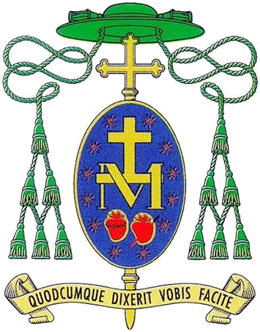
Placed under the patronage of the Most Sacred Heart of Jesus, the Diocese of Kumba seeks, in the words of its guiding aspiration, that “That all may know the Heart of Christ.” — a Heart of mercy, reconciliation and hope.
Diocese in brief
- Erected
- 15 March 2016, by Pope Francis
- Installed
- 7 May 2016
- From
- Diocese of Buéa
- Province
- Archdiocese of Bamenda
- Cathedral
- Sacred Heart, Fiango–Kumba
- Patron
- Most Sacred Heart of Jesus
- Bishop
- Most Rev. Agapitus Enuyehnyoh Nfon
- Territory
- Meme · Ndian · part of Koupé-Manengouba
- Borders
- Mamfe (N) · Buea (S) · Nkongsamba (E)
- Area
- ≈ 11,431 km² (4,415 sq mi)
- Deaneries
- 4 — Fiango, Kumba Town, Tombel, Mundemba
- Communities
- 22 parishes & 8 pastoral zones
- Population
- ≈ 562,988 (2016)
- Catholics
- ≈ 205,491 (36.5%)
Our story
A brief history
The Diocese of Kumba is the youngest in the Ecclesiastical Province of Bamenda. It was created on Tuesday, 15 March 2016 by His Holiness Pope Francis, with territory detached from the Diocese of Buéa and placed under the patronage of the Sacred Heart of Jesus. On the same day the Holy Father named Bishop Agapitus Enuyehnyoh Nfon as pioneer Bishop; he was installed on 7 May 2016 by Archbishop Piero Pioppo, then Apostolic Nuncio to Cameroon and Equatorial Guinea.
Yet the diocese is young only as a jurisdiction. The Catholic faith in this land reaches back more than 120 years, to a first parish — St. Michael the Archangel — established in 1905. What the missionaries began, the local Church now carries forward.
Today the growing flock is spread across 22 parishes and 5 pastoral zones, with over 220 mission stations, gathered into four deaneries — Fiango, Kumba Town, Tombel and Mundemba. They are served by some 72 diocesan priests, 14 religious priests, 40 religious sisters and about 175 catechists.
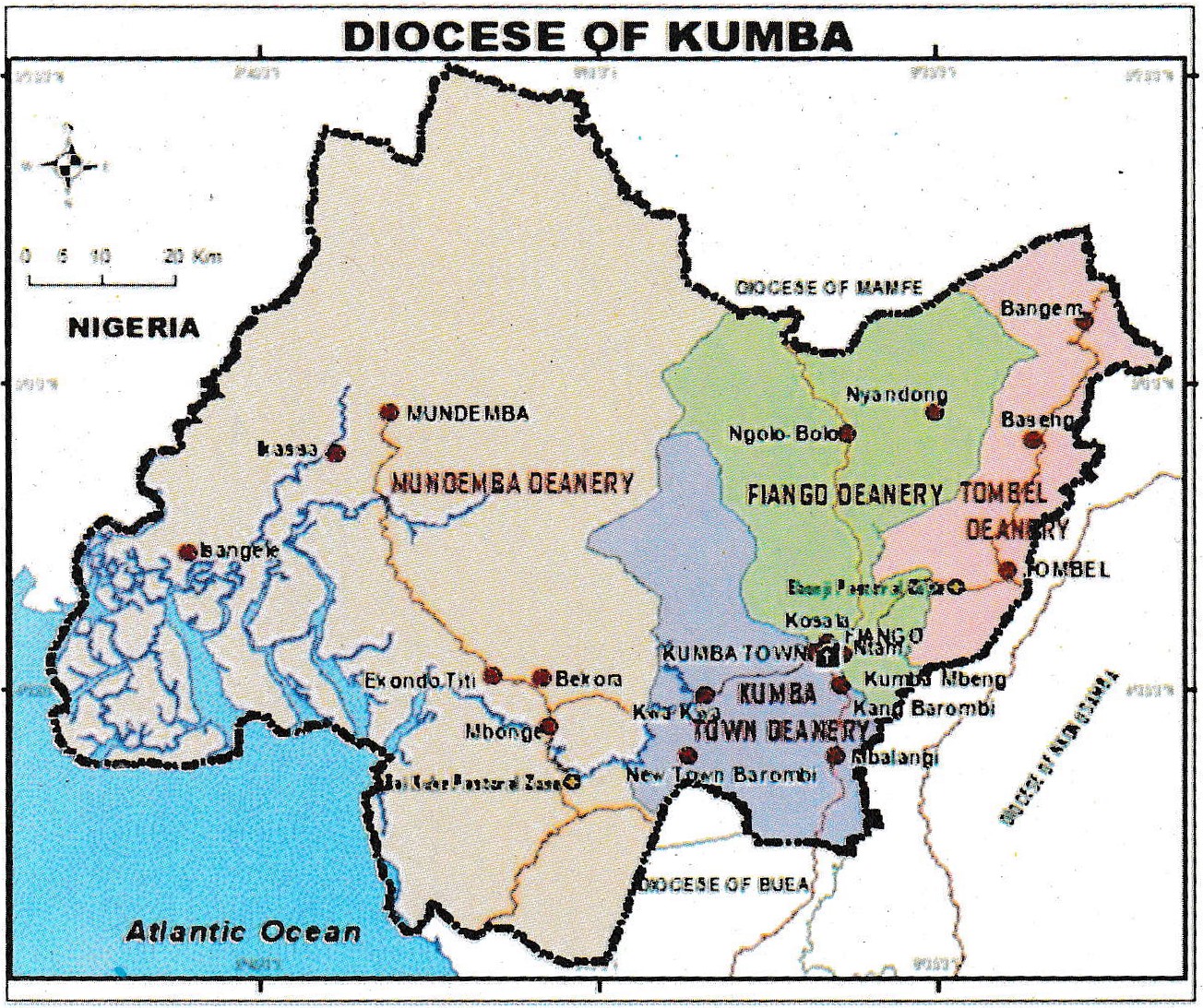
The diocese spans the Meme and Ndian divisions and part of Koupé-Manengouba, in the South West Region of Cameroon — an equatorial land of highlands, plantations, rivers and Atlantic coastline covering about 11,431 km². At its creation the territory held some 562,988 people, of whom 205,491 (36.5%) were Catholic.
Its infancy has not been without trial: a heavy pastoral workload on few priests, the pressing need for churches, clergy houses and resources, and above all the socio-political crisis that has struck the region since 2016 — bringing loss of life, the burning of homes and church structures, and the closure of some places of worship. Predominantly rural, with limited roads, schools and health facilities, the diocese nonetheless presses on.
Through prayer and the dedication of the Christian Family of Kumba — “the Family of Love” — with friends and well-wishers at home and abroad, the diocese strives to become something precious for the Sacred Heart of Jesus and the Immaculate Heart of Mary.
“A new lampstand for the light of Christ in the Southwest.”
Mother church
The Cathedral of the Sacred Heart
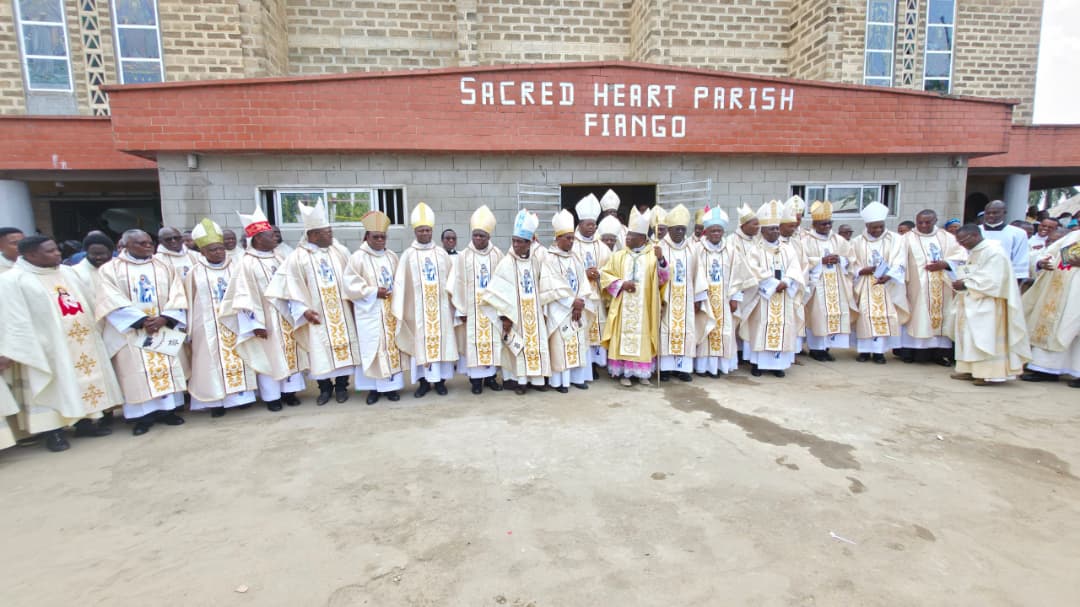
At the heart of the diocese stands the Cathedral of the Sacred Heart in Fiango, Kumba — the cathedra, or seat, of the Bishop and the spiritual home of the whole diocesan family. It was here that the erection of the diocese was proclaimed in 2016.
The Cathedral is the setting for the great celebrations of the local Church: the Chrism Mass of Holy Week, ordinations, and diocesan pilgrimages. Its patron, the Most Sacred Heart of Jesus, gives the diocese both its name in devotion and its mission of merciful love.